Here's the solution to the previously posted crossword puzzle. Hope you enjoyed the challenge. And as always, please feel free to share as an educational tool.
Solved – Filariasis Crossword Puzzle


Parasitology for students and the rest of us
Here's the solution to the previously posted crossword puzzle. Hope you enjoyed the challenge. And as always, please feel free to share as an educational tool.

The followup crossword puzzle to the previous filariasis clinical case study is shown below. As always please feel free to use this as a learning tool or review.

Given this patient’s history, clinical presentation, eosinophilia (as noted in the complete blood count) and the worm (microfilaria) seen in the peripheral smear, the patient’s diagnosis is most likely filariasis. Filariasis is caused by thread-like nematodes that are transmitted by mosquitos. The diagnostic form for most of these nematodes is the microfilarial larval form of the parasite found in the peripheral blood or tissue depending on the worm. Adult worms are found in the lymphatics in filariasis.

A 78-year-old female is brought to your office for examination by her son. The son just recently returned from the State of Madhya Pradesh in India where he picked up his mother to bring back to the United States after the unfortunate loss of most of her immediate family in a tragic fire. She does …
Continue reading "A Routine Physical Examination for a Mother Arriving From India"

Below is the solved Pediculus humanus capitis crossword puzzle from my previous post. The hints with answers are also included. I hope you enjoyed it and until the next case study example in parasitology ... all the very best!

Crossword Puzzle - Pediculus humanus capitis - Below is a crossword puzzle to test your knowledge on what you may have picked up in the last case study. As always, feel free to use the case study and crossword puzzle as an educational exercise for any of you involved in teaching.

This patient is infested with Pediculus humanus capitis otherwise known as head lice. Pediculus humanus capitis are insects belonging to the family Pediculidae. The family also includes Pediculus humanus humanus (body louse) and Pthirus pubis (crab louse).

The patient is a 55-year-old male that comes to a Veterans Hospital on an outpatient basis for his periodic examination. He has a history of homelessness and chronic substance abuse. He states that he has clean not been abusing any substance for the past year. He also has a medical history significant for COPD, diabetes, and tobacco use. He currently presents with a two week history of what he describes as eczema around his ears and the back of his neck.

Attached is the completed Enterobius vermicularis crossword puzzle. For those of you in education please feel free to use these as educational tools.

In keeping form with previous posts here is the crossword puzzle for the previous case study involving a cook with an Enterobius vermicularis infection.

This case was diagnosed as an infection with the nematode Enterobius vermicularis (Enterobiasis).
Working in an inner-city hospital more than often can be challenging as a physician as well as rewarding. That holds true for all healthcare professions in an inner-city hospital. It’s in the fast-paced environment of these hospitals, and the melting pot of the surrounding population, where the exposure to a plethora of human conditions and …
Continue reading "Microbiology Case Study: Unusual Stool Specimen"

Below you will find the "Identifying Urine Sediment Organisms in STD Cases (Crossword Puzzle-Solved)". As I have said before, please do print and use this and any previously posted crossword puzzles as educational tools for students. I regularly teach at the graduate level and know that the students find them to be an excellent way …
Continue reading "Identifying Urine Sediment Organisms in STD Cases (Crossword Puzzle-Solved)"
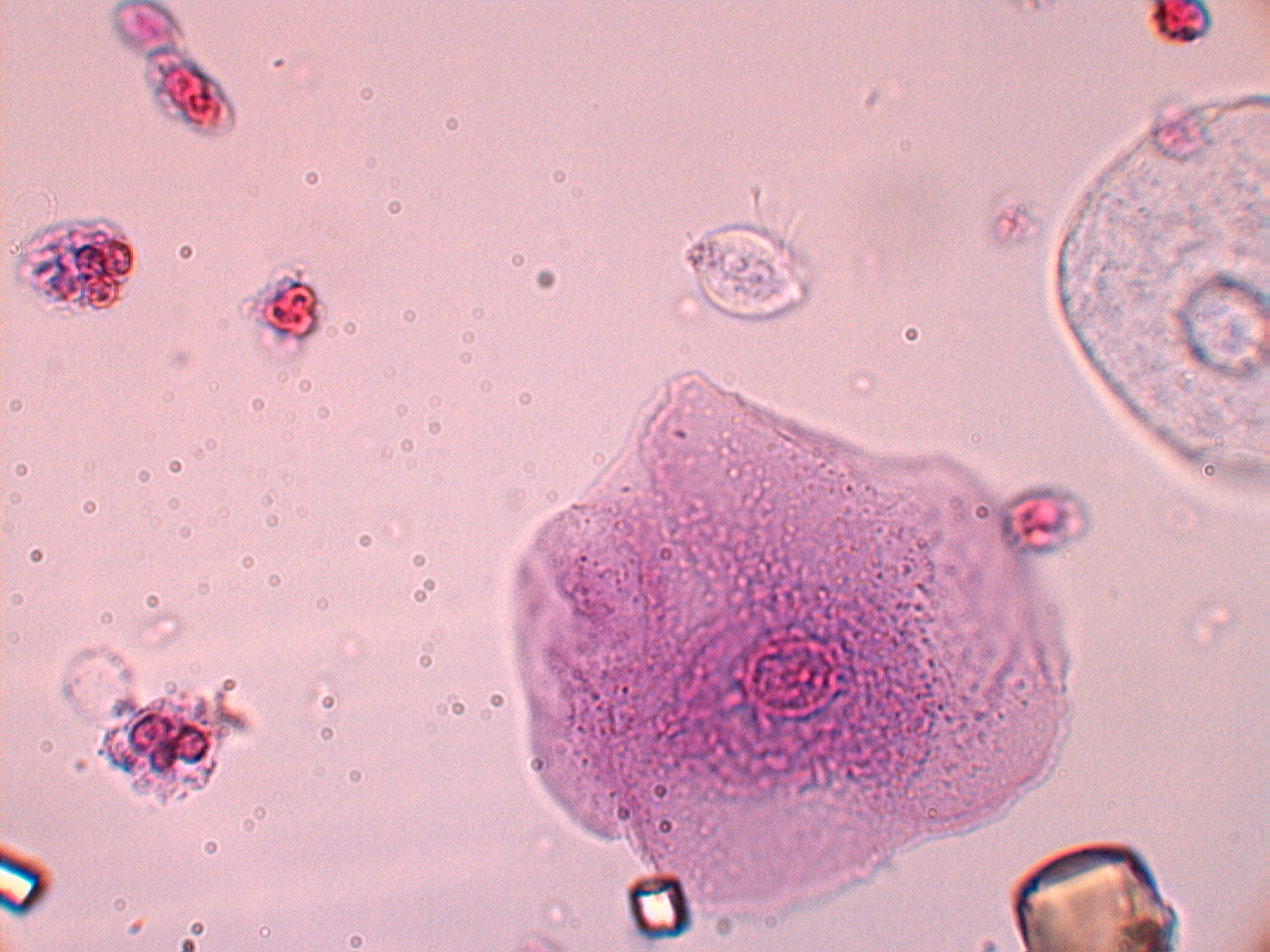
Here is the crossword puzzle for the previous case study blog. As always, hope you will enjoy it and please feel free to use it as an educational tool. The solved crossword puzzle will follow soon afterward.
Trichomonas vaginalis is a protozoan flagellate that is a member of a triad group of organisms responsible for the majority of cases of vaginitis / urethritis.
A 25-year-old heterosexual male is seen at a STD outpatient clinic complaining of what he describes as a periodic clear to opaque penal discharge with dysuria.

Below is the solution to the Diphyllobothrium Crossword Challenge.

Following-up on the last case study, here is a crossword puzzle to challenge you on Diphyllobothriasis.

This child was diagnosed with a Diphyllobothriasis infection or "Fish Tapeworm" infection.
A mother brings her twelve-year-old male child to the pediatrician for his yearly physical examination. When questioned if there were any changes in sleep patterns, eating habits, etc. the mother only acknowledges that from time to time he complains of abdominal discomfort and periodic bouts of diarrhea. When the child is asked about the abdominal …
Continue reading "Understanding Pediatric Abdominal Pain and Parasitic Infections-Part 1"

Below is the Chaga's Disease CrossWord Puzzle solution.

Here is a crossword challenge directly linked to the previous blog on Chaga's Disease.

What parasite does the physician suspect the patient having based on the clinical history, family history, and clinical presentation? Trypanosoma cruzi, the cause of Chaga's Disease. What is a "vinchucas" and what is its significance? Vinchucas is a name given to the Triatomine or Raduvid bug in various South American geographic locations. There are other …
Continue reading "Chronic Fatigue and Chest Pain: Uncovering Parasitic Infections-part 2"

A 24-year-old woman, recently immigrated from Guatemala, presents with chronic fatigue, chest pain, throat discomfort, dizziness, and fainting spells. Physical examination reveals an enlarged liver and abnormal heart sounds. The physician suspects a parasitic infection likely related to “vinchucas,” and plans specific tests and a cardiology referral.

The arthropod submitted was identified as the brown marmorated stink bug (Halyomorpha halys). The bug is not an ectoparasite. It is not known parasitize or be a source of disease whether directly or indirectly. The stink bug gets its name from its ability to produce a pungent odor when mishandled or threatened. This is thought to be a defensive adaptation of the arthropod that helps prevent it from being eaten by birds and lizards. They are generally a nuisance in homes where they can cause an infestation.

There are times when the Microbiology Laboratory is called on to make an identification of an arthropod retrieved from a patient directly, a patient's clothing, or their living quarters.

Here’s a Echinococcus Crossword Puzzle challenge for you to do.

This patient was diagnosed with hydatid disease or in this case cystic echinococcosis. Hydatid disease is a parasitic zoonotic disease caused by a tapeworm. Specifically, it is most commonly caused by the cestode, Echinococcus granulosus (commonly called the Dog Tapeworm).
Her travel history was significant in that she had recently immigrated from her native Greece where she had been living on her family's small farm for all her life. On this farm the family raised sheep and notably the farm had a number of dogs which were free to roam.

Here's a Mites Crossword Puzzle challenge for you to do. Fun way to learn a few new things and maybe review some others.

The patient has an infestation of mites. Mites are less than 1mm in size and oval in shape with a semi-transparent color that is darker after feeding. Mites are a diverse group of arachnid arthropods that are relatively small and can easily be overlooked.
He appears otherwise healthy. His sleeplessness is attributed to what he says is a constant feeling that something or things are crawling all over his body and an intense pruritus of his arms and abdominal area.
Here is the African trypanosomiasis crossword solved - I hope you enjoyed it!
This crossword puzzle challenges you about what you may have learned in the last blog "The World is Always Smaller When You Travel".
So we can deduce that the trypanosome suspected is an African trypanosome. But which one?

A 32-year-old Male is brought to the emergency room complaining of a severe headache, fever, aching muscles and joints. He says that he has not been able to get the energy up to go into work for the last two days.

Myiasis is described as an infestation of a live invertebrate host with the fly (dipteran) larvae.

The patient on day 6 of his hospitalization developed a sudden onset of coughing and wheezing.

Remember the repellant and protective clothing as it gets warmer!

The last clinical case study presentation that I posted on my blog was related to ticks so I thought I would follow-up with a crossword puzzle related to ticks. The answers to clues can be found in the blog as well as on my site link on ticks in the arthropod section. Please enjoy and …
The arthropod submitted to the lab was identified as the tick Amblyomma Americanum or the Lone Star Tick. The name is derived from its characteristic white dot on the scutum of the female tick. The Lone Star Tick name is the most common name used howeverthere are other names used to describe it (Northeastern Water Tick and Turkey Tick). Amblyomma americanum is found geographically in the Southern and Eastern United States. Though it can be found as far North as Maine, it is the experience of this Microbiologist to have this tick be a rare submission for identification in the Connecticut area. The overwhelming number of submissions of ticks in our laboratory are either Ixodes scapularis (Deer Tick) or Dermacentor variabilis (Dog Tick). Amblyomma americanum take on a rounder shape compared to the other more common endemic ticks. Here in Connecticut, we worry most about Ixodes scapularis because this tick is known to transmit Borrelia burgdorferi (the causative agent of Lyme Disease); Babesia microti (the causative agent of Babesiosis); and Ehrlichia chaffeensis/ewingii (the causative agents of human ehrlichiosis). Dermacentor variabilis are known to transmit Rocky Mountain spotted fever and tularemia. Amblyomma americanum is a known vector for Ehrlichia chaffeensis/ewingii as well as tularemia. Unlike Ixodes scapularis and Dermacentor variabilis, Amblyomma americanum is a more aggressive tick as it will actively seek an animal to feed when compared to the former which will find animals to feed on by “questing”. Questing refers to the tick climbing to the top of a leaf or blade of grass and waiting in a poised position where it will grab on and attach to animals or humans as they walk by. The identification provided by the laboratory is important information for the clinician that can help guide in diagnostic or treatment decisions. The reporting of whether the tick is engorged or not engorged is also important information provided in a report. An engorged tick indicates that it has been feeding for an extended amount of time which will increase the chance that a pathogenic organism, if present in the tick, will be transmitted to the patient. If the tick is engorged than the likelihood of disease transmission is greater and the physician may opt to treat prophylactically based on the symptoms presenting in the patient. Our laboratory will also report out whether the mouthparts are intact or not. Mouthparts that are left in the patient’s dermis can sometimes lead to secondary infections at the sight. Most interesting about Amblyomma americanum is the expanding list of possible diseases it can transmit. There are recent descriptions of the Bourbon and Heartland virus being transmitted by Amblyomma americanum. In persons not responsive to doxycycline treatment for suspected tick-borne rickettsial disease, these viruses should be ruled out. Yet another interesting complication of an Amblyomma americanum tick bite, is the possibility of some individuals developing life-threatening allergic reactions. This reaction is also called alpha-gal syndrome. Sensitization occurs from the presence of alpha-gal in the saliva of the Amblyomma americanum tick. In this allergic reaction the individual will become hypersensitive to the protein alpha-gal leading to possible a life-threatening anaphylaxis reaction. Interestingly, alpha-gal is found in non-primate meat and products. It can be found in cat dander as well as in the drug cetuximab (also known as Erbitux) which is prescribed for the treatment of bowel cancers, and head/neck cancers. Allergic reactions usually will occur 3-6 hours after consuming red meat thereby making it many times difficult to ascertain the source of the allergic reaction. When testing an individual for alpha-gal sensitivity, standard meat test skin solution tests are not reliable and should instead have skin tests with raw meat and/or pork kidney used as these are more sensitive and reliable. Serological testing for specific alpha-gal IgE are also available for suspected alpha-gal allergies.
Part of working in a Microbiology Lab can include the identification of submitted arthropods. Though not extremely common, we get probably about two a month submitted for identification. Of course this number fluctuates seasonally and with the weather conditions. Here up in the Northeast part of the United States we have our usual suspects being …
Continue reading "An Unexpected Find on a Pathologist After Going on a Hike (part one)"

The following is the solution to the Babesia crossword puzzle. Thank you for all the positive comments. One astute person did however find an error in the crossword puzzle which I must own up to. Thanks for pointing it out. The error is for clue "16 Down" where the word "piroplasm" should have been "Apicomplexa" …
Continue reading "Crossword Puzzle Challenge – The Babesia Solved"
After the last clinical case study presentation that I posted on my blog I thought I would follow-up with a crossword puzzle related to it. Please enjoy and as always the crossword puzzles are meant to be fun and educational so the distribution to others and to students is highly encouraged. HAVE A GREAT NEW …

Ixodes scapularies female not engorged with mouthparts intact - image photo by W. Vientos The Diagnosis The patient in this case study was diagnosed with an acute Babesia microti infection. The smear was diagnostic for the piroplasm. The presence of a maltese cross arrangement of the organisms in one of the red cells in the …
Continue reading "An 80 year-old Women Found Unconscious by Her Daughter (Part 2)"
An 80 year-old woman is brought to the emergency room by ambulance after being found by her daughter unconscious on the floor of the mother's home in a central Connecticut town located in the United States. The 80 year-old woman is independent and lives alone. Her daughter is use to checking on her daily by …
Continue reading "An 80 year-old Women Found Unconscious by Her Daughter"

Shown below is the completed crossword puzzle for the Schistosoma. Hopefully you enjoyed it and challenged some of you. Please provide any comments or suggestions for future crossword puzzles that might be posted. And a sincere thank you for all of you that responded with "like" comments. Please feel free to copy and distribute for …
Continue reading "Crossword Puzzle Challenge Answers – The Schistosoma"
Back by popular demand is this months crossword puzzle challenge.

Below is the solution to the Plasmodium CrossWord Puzzle previously posted. Let me know if you like it and if you'd like more posted. The copying and distribution of these crossword puzzles are welcomed. They are great for educational purposes. Clues with their answers Across 5) This piroplasm is closely related to the Plasmodium and …

The deployment of American troops to Afghanistan was expected to result in soldiers contracting leishmaniasis
A soldier presents to a Veteran's Hospital dermatology clinic complaining of a festering month long wound on his face that has not responded to antibiotics prescribed to him by his personal physician. He describes another similar wound on his right upper chest that has appeared in the last few days.. His physical examination is otherwise …
Continue reading "A Soldier Returning From a Tour of Duty in Afghanistan (Part 1)"

Bed bugs have recently made a resurgence in the modern day world that has placed them in the spotlight of many newspaper articles and news casts ready to sensationalize.

The initial Microbiologist making the identification required some consultation with a more senior/expereinced Microbiologist to make the confirmatory identification.
Plasmodium Crossword Puzzle Challenge

This young woman, and most likely the other two women, were infected with Ascaris lumbricoides otherwise known as the Human Roundworm.

As I approached the front desk I immediately noticed and made eye contact with three young women that could only be described as models. When I asked what I could do for them one stepped toward me and presented me with a jar wrapped in aluminum foil.

What is the identification of the object retrieved and submitted for identification? The object submitted for identification was identified as a male Trichuris trichiura adult worm. The length was 35mm and characteristically for males the posterior end is coiled. Females can have about the same length as there is some overlap in size, but generally …
Continue reading "A Colonoscopy With an Unexpected Finding (Part 2)"

The patient is a 55 year-old male undergoing a colonoscopy. He has had a history of vague abdominal discomfort but his colonoscopy was part of his routine workup related to a family history of colon cancer and a previous colonoscopy that resulted in the removal of two polyps. While performing the colonoscopy small objects were …
Continue reading "A Colonoscopy With an Unexpected Finding (Part 1)"
The child in this case study had a cockroach nymph removed from her ear. The infestation of ear canals with various arthropods such as cockroaches, ticks, maggots, etc. is not uncommon and numerous reports are present in the literature. Most of these infestations occur in crowded areas or where the living conditions are conducive to …
Continue reading "A Small Child is Brought to the Emergency Room Acutely Agitated – (Part 2)"

A 1-year-old male in severe distress was brought to the emergency room early in the morning by his mother. The mother describes her child as normally mild mannered and happy. He woke her up in the early morning hours screaming and holding his head as if he was experiencing acute pain. She had taken his body temperature and said that it was normal.